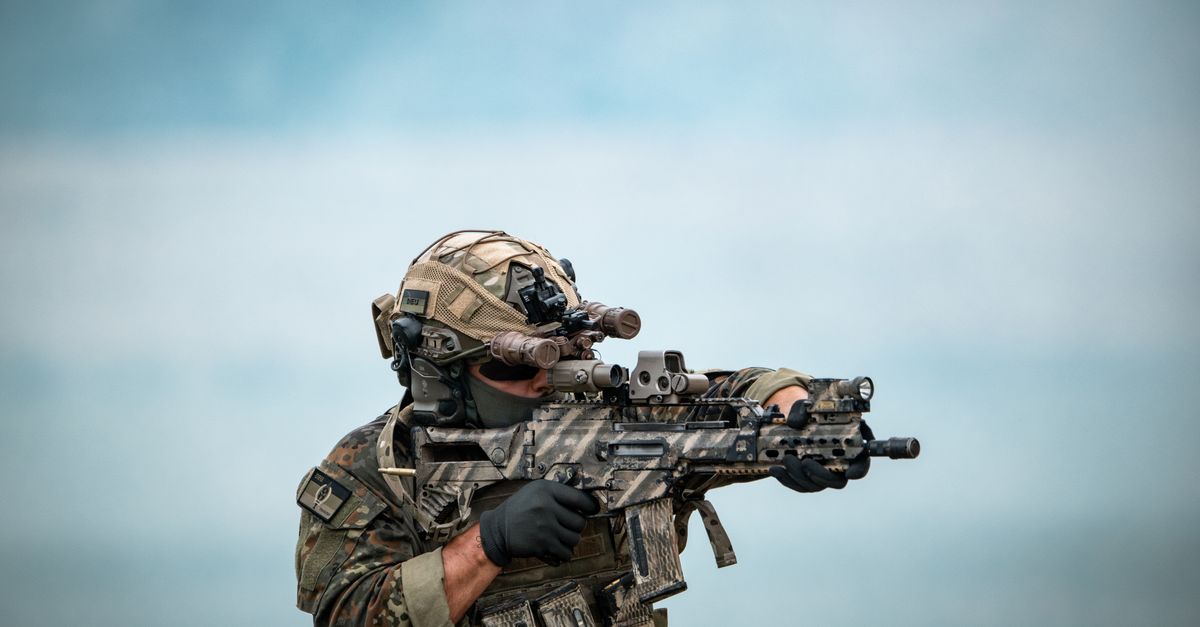
The algorithmic battlefield is no longer a futuristic concept; it's here. The U.S. Army recognizes this shift and is actively working to secure a decisive warfighting edge through the strategic integration of Artificial Intelligence (AI). This imperative demands a fundamental rethinking of acquisition strategies, workforce development, and ethical considerations. See our Full Guide for a deeper dive.
The global military landscape is undergoing a profound transformation. AI is no longer a peripheral advantage but a cornerstone of military operations, influencing everything from strategic-level decision-making to tactical execution. It enhances operational efficiency, provides unparalleled analytical capability, and is fundamentally reshaping future geopolitical scenarios. Nations are in a race to integrate these technologies, understanding that the military that can best harness AI will hold a significant advantage.
This isn’t merely a race to build autonomous weapons; it’s a strategic imperative to establish cognitive overmatch, dominating the intellectual and decision-making battlespace. Effectively turning modern warfare into a high-stakes game of speed chess. The advantage does not go to the player with the most pieces, but to the one who can process the state of the board, identify patterns, and constantly execute decisive moves while their opponents are still thinking.
AI provides unmatched cognitive velocity, data processing, and analysis of information at a speed and scale impossible for humans, turning vast datasets from the battlefield into actionable intelligence and productive decisions. As the conflict in Eastern Europe has demonstrated, the effective use of AI for target recognition, data analysis, and drone operations can be a decisive factor, allowing a smaller, technologically adept force to challenge a larger adversary. The U.S. Army must not only keep pace but lead and dominate in harnessing these technologies to maintain national security, as outlined in its Army Futures Command Concept for Maneuver in Multi-Domain Operations 2028.
The primary challenge is that the Army’s current acquisition strategies were designed for an industrial age of hardware, not a digital age of software. The rapid, iterative development cycles of AI are often too fast for these slow and rigid processes to accommodate. Consider the Federal Risk and Authorization Management Program (FedRAMP), a mandatory security vetting process for cloud technologies. The authorization timeline, typically lasting between 6 and 18 months, serves as a significant bottleneck, preventing the timely deployment of cutting-edge AI tools and creating a substantial lag between commercial innovation and government implementation.
Bridging the Acquisition Gap: A New Approach
The Army's existing acquisition processes need a radical overhaul to accommodate the speed and fluidity of AI development. This requires a multi-pronged approach:
-
Streamlined Procurement: Embracing agile acquisition methodologies, such as Other Transaction Authorities (OTAs), is crucial. OTAs allow for faster contracting and collaboration with non-traditional defense contractors, including innovative startups at the forefront of AI research.
-
Modular Open Systems Approach (MOSA): Implementing MOSA ensures that AI systems are built with interoperability and scalability in mind. This allows for easier integration of new technologies and reduces vendor lock-in, fostering competition and driving innovation.
-
Redefining Risk Assessment: Traditional risk assessment models need to be updated to reflect the unique challenges of AI. This includes considering the risks associated with algorithmic bias, data privacy, and adversarial attacks.
The Human Factor: Upskilling the 51C Workforce
Technology alone isn't enough. The U.S. Army's 51C workforce – contingency contracting officers and noncommissioned officers – must be transformed from transactional buyers to strategic acquisition leaders capable of navigating the complexities of AI procurement. This requires significant investment in education and training:
-
AI Fundamentals: Equipping the 51C workforce with a solid understanding of AI concepts, including machine learning, deep learning, and natural language processing.
-
Cybersecurity Expertise: Integrating cybersecurity training into the curriculum to address the evolving threats associated with AI-powered systems.
-
Ethical Considerations: Emphasizing the ethical implications of AI in warfare, including algorithmic bias, accountability, and the potential for unintended consequences.
-
Energy Market Fluctuations: Given the power consumption needs for advanced AI and quantum computing, the workforce will need to understand energy markets to ensure long-term warfighting capabilities.
The Army has already begun exploring these concepts by launching pilots to use generative AI for acquisition activities. For example, during a recent Warfighter Exercise at Fort Bragg, the 419th Contracting Support Brigade and 143rd Expeditionary Sustainment Command utilized AI simulations and the Maven Smart System to enhance 51C contingency contracting operations.
Addressing Ethical Dilemmas
The integration of AI into warfare raises profound ethical questions. Algorithmic bias, the potential for autonomous weapons systems, and the risk of unintended consequences require careful consideration. Transparency, accountability, and human oversight are essential to mitigating these risks and ensuring that AI is used responsibly. International cooperation and the development of ethical guidelines are also crucial to preventing an AI arms race.
Forging AI Dominance: A Strategic Imperative
The U.S. Army faces a pivotal moment. By embracing AI and transforming its acquisition strategies and workforce development, it can secure a decisive warfighting edge on the multidomain algorithmic battlefields of tomorrow. Failing to adapt will leave the nation vulnerable to adversaries who are aggressively pursuing AI capabilities.
The path forward requires a bold vision, a commitment to innovation, and a willingness to challenge the status quo. The algorithmic battlefield is here. The time to act is now.