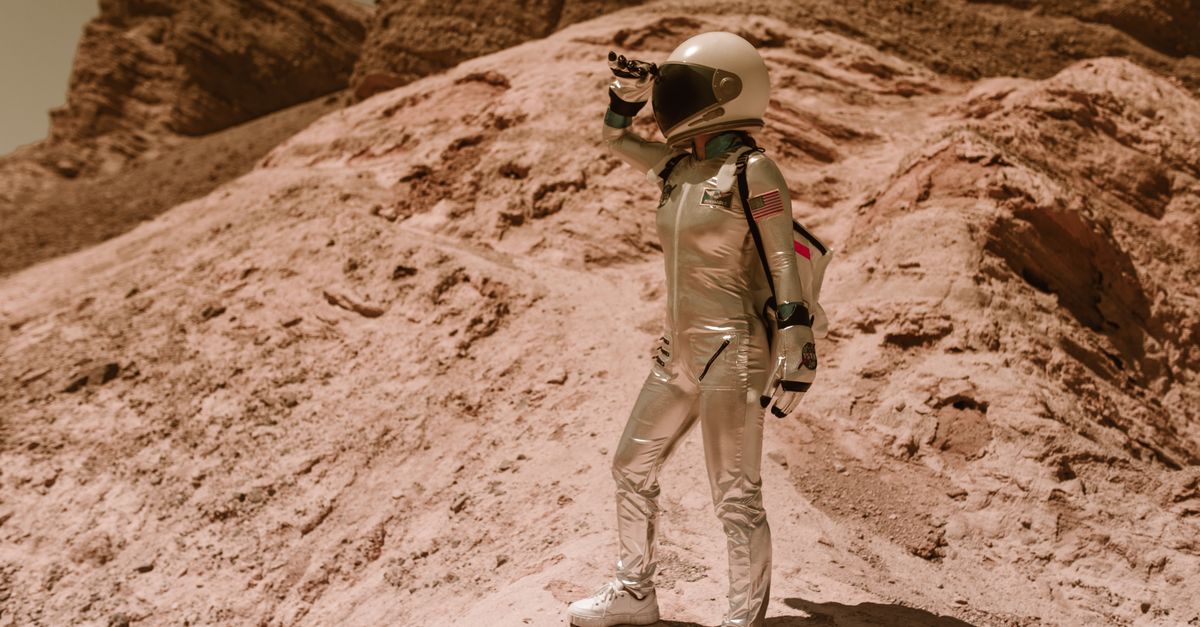
Augmented Reality (AR) and Artificial Intelligence (AI) are rapidly transforming industries across the board, and their potential extends far beyond consumer applications. For mission-critical operations, where precision, safety, and efficiency are paramount, the convergence of AR and AI offers unprecedented capabilities. NASA, an organization synonymous with pushing technological boundaries, is actively exploring and implementing these technologies for spacewalk preparation and astronaut health monitoring, providing valuable insights for other high-stakes sectors.
The Challenge of Space and the Need for Enhanced Support
Space exploration presents unique challenges. Spacewalks, or Extravehicular Activities (EVAs), are complex and potentially dangerous operations. Astronauts must navigate a zero-gravity environment, contend with extreme temperatures, and rely on their spacesuits for life support. Proper preparation and real-time support are critical for mission success and astronaut safety.
Similarly, maintaining the health of astronauts during long-duration space missions is essential. The physiological effects of space travel, such as bone density loss and cardiovascular changes, require continuous monitoring and proactive intervention. Traditional methods of health assessment can be cumbersome and time-consuming, particularly in the resource-constrained environment of the International Space Station (ISS).
AR for Enhanced Spacewalk Preparation
NASA is leveraging AR to enhance the efficiency and safety of spacewalk preparations. Traditionally, astronauts rely on paper manuals and lengthy training sessions to familiarize themselves with the procedures and equipment involved in EVAs. AR offers a more intuitive and interactive approach.
By overlaying digital information onto the real world, AR provides astronauts with hands-on, step-by-step guidance during pre-spacewalk tasks. For example, astronauts can use AR-enabled tablets or headsets to visualize the internal components of their spacesuits, identify potential issues, and follow detailed maintenance instructions. This eliminates the need to constantly refer to paper manuals, reducing the risk of errors and improving overall task completion time.
Furthermore, AR can be used to simulate the spacewalk environment, allowing astronauts to practice complex maneuvers and troubleshoot potential problems in a safe and controlled setting. These simulations can be tailored to specific mission objectives, providing astronauts with realistic training scenarios that prepare them for the challenges they will face in space.
AI-Powered Health Monitoring in Space
AI is playing an increasingly important role in monitoring astronaut health and well-being. Traditional medical assessments often require specialized equipment and trained personnel, which may not always be readily available on the ISS. AI-powered tools can automate many of these tasks, providing real-time insights into astronaut health status.
For instance, AI algorithms can analyze data from wearable sensors, such as heart rate monitors and activity trackers, to detect anomalies that may indicate underlying health issues. These algorithms can also be trained to recognize subtle changes in astronaut behavior or performance that could be indicative of stress or fatigue.
NASA is also exploring the use of AI-powered virtual assistants to conduct remote health checks. These virtual assistants can guide astronauts through self-assessments, ask targeted questions, and analyze their responses to identify potential health concerns. This allows medical personnel on Earth to remotely monitor astronaut health and provide timely interventions, even when direct communication is limited.
NASA's Use Case: A Blueprint for Terrestrial Applications
NASA's application of AR and AI for spacewalk prep and health checks isn't just about space exploration; it has significant implications for a variety of terrestrial industries.
- Aerospace & Aviation: AR can assist with aircraft maintenance, providing technicians with real-time guidance and access to technical documentation. AI can analyze flight data to predict potential equipment failures and optimize maintenance schedules.
- Manufacturing: AR can guide workers through complex assembly processes, reducing errors and improving efficiency. AI can monitor production lines to identify bottlenecks and optimize resource allocation.
- Healthcare: AR can assist surgeons during complex procedures, providing them with real-time anatomical visualizations. AI can analyze patient data to predict potential health risks and personalize treatment plans.
- Oil & Gas: AR can assist technicians during maintenance and repair tasks on remote oil platforms, improving safety and reducing downtime. AI can monitor pipelines to detect leaks and prevent environmental damage.
- Emergency Response: AR can provide first responders with real-time situational awareness, helping them to navigate hazardous environments and make informed decisions. AI can analyze data from multiple sources to predict potential emergencies and optimize resource allocation.
The Future of AR and AI in Mission-Critical Operations
As AR and AI technologies continue to evolve, their potential for mission-critical operations will only increase. Future applications may include:
- Autonomous Robotics: AR and AI can enable robots to perform complex tasks in hazardous environments, such as repairing satellites or cleaning up nuclear waste.
- Predictive Maintenance: AI can analyze data from sensors and equipment to predict potential failures and optimize maintenance schedules, reducing downtime and costs.
- Personalized Training: AR and AI can create personalized training programs that adapt to individual learning styles and skill levels, improving knowledge retention and performance.
- Remote Collaboration: AR and AI can enable remote experts to collaborate with on-site personnel, providing real-time guidance and support, regardless of location.
Conclusion
NASA's pioneering work in using AR and AI for spacewalk preparation and health monitoring showcases the transformative potential of these technologies for mission-critical operations. By enhancing situational awareness, improving efficiency, and enabling remote collaboration, AR and AI are helping to push the boundaries of space exploration and paving the way for safer and more effective operations in a variety of industries on Earth. For business leaders seeking to enhance safety, improve efficiency, and gain a competitive edge, exploring the integration of AR and AI into their own mission-critical operations is no longer a futuristic fantasy, but a strategic imperative. The lessons learned from the extremes of space offer invaluable insights for optimizing processes and empowering personnel in even the most demanding terrestrial environments.